The Hidden Ingredient
Your cup is ~98% water — not beans or leaves
No matter how rare your beans or how prized your longjing, the solvent doing almost all the work is plain H₂O. Change the water, and you change the entire cup: aroma, sweetness, bitterness, and mouthfeel all follow.
Why water beats beans and leaves on impact
Coffee people obsess over grind size, origin, and roast curve. Tea drinkers chase harvest date, cultivar, and craft. Both are right to care — but dissolved solids, chlorine, and mineral balance in your water interact directly with extraction chemistry. Hard water can flatten acidity in coffee; soft, clean water lets delicate aromatics shine. For tea, wrong mineral load or residual disinfectants can mask umami, exaggerate astringency, or leave a metallic finish.
You cannot taste the beans or leaves in isolation. You always taste what they left behind in the water. That is why professionals treat brewing water as seriously as the leaf or the roast.
The SCA benchmark for brewing water
The Specialty Coffee Association publishes a Water for Brewing specification used in competitions and cupping labs worldwide. It is an excellent reference for tea as well, because both beverages rely on similar principles: controlled mineral content, neutral pH, and absence of off-flavours.
| Parameter | SCA recommended range | Why it matters |
|---|---|---|
| Total dissolved solids (TDS) | 75–250 ppm | Too low can taste hollow; too high binds flavours and dulls clarity |
| pH | 6.5–7.5 | Keeps extraction predictable and avoids sour or chalky extremes |
| Chlorine / chloramine | Effectively zero | Reacts with aromatics and creates medicinal, rubbery notes |
| Alkalinity (buffering) | Balanced with hardness | Prevents wild pH swings during extraction |
📊 SCA AT A GLANCE
75–250
ppm TDS — the “sweet spot” window
6.5–7.5
pH — stable, cupping-friendly neutrality
Australian tap water often sits outside this window in one direction or the other: high hardness in some suburbs, aggressive chlorination for safety, or variable seasonal blends from the treatment plant. RO gives you a **clean baseline**; you can then dial taste with remineralisation or recipe water if you chase competition-style cups.
How tap water quietly ruins extraction
Chlorine and chloramine are excellent for public health — and terrible for delicate volatile compounds in tea and coffee. They oxidise desirable aromatics and introduce harsh, chemical top notes that no amount of expensive leaf or single-origin can fix.
Excess calcium and magnesium (hardness) binds to acids and polyphenols. In coffee, that often means muted brightness and muddier flavour. In green tea, hard water can make polyphenols read as coarser astringency instead of clean sweetness.
High alkalinity buffers pH upward, which changes how acids extract and can leave tea tasting flat or “soapy,” while some oolongs lose their layered floral lift.
⚠️ COMMON TAP TRAPS
Great for drinking straight from the tap — not always ideal as a blank canvas for brewing.
If you would not happily cup the water alone at room temperature, it is already fighting your tea or coffee before the kettle finishes heating.
Chinese tea culture: one leaf, many waters
Traditional Chinese tea appreciation has long recognised that different teas ask for different water character, not only temperature and time.
- Green tea (绿茶) — tender buds and high amino-acid content reward soft, low-mineral water and moderate heat so catechins do not crash the party as harsh bitterness. Famous springs were prized partly for their gentle mineral profile.
- Oolong (乌龙) — partial oxidation and rolled leaves benefit from water that carries enough structure to unfurl layers: florals first, then fruit, then roast. Extremely hard tap water can crush those transitions; ultra-flat distilled water can feel thin.
- Pu’er and heicha (普洱 / 黑茶) — aged or fermented styles often welcome fully boiling water and water that does not add metallic or chlorine noise, so earth, camphor, and sweetness read clearly.
You do not need a mountain spring in your kitchen. You need predictable, clean water and the right heat — then your tea can show what it was meant to show.
Tap vs mineral bottled vs RO for brewing
| Source | Typical pros | Typical cons for tea & coffee |
|---|---|---|
| Tap | Convenient, cheap | Chlorine/chloramine, variable hardness, seasonal TDS shifts |
| Mineral bottled | Pleasant to drink | TDS and mineral mix vary by brand; some are too hard for green tea; cost and plastic |
| RO purified | Consistent, very low TDS, no chlorine | May feel “light” for some styles until you learn to remineralise or blend if desired |
Many cafés and serious home brewers use RO (or deionised) water as a controlled starting point — the same logic that makes RO ideal for drinking safety also makes it ideal for repeatable brewing experiments. Start clean, adjust once, rather than fighting yesterday’s tap chemistry.
Brew like a pro — in four steps
Start with chlorine-free, consistent water
RO removes disinfectants and levels out the extremes of tap variability.
Pick temperature for the style
Lower heat for delicate greens; full boil for pu’er and most black teas; oolong in between.
Use enough leaf or coffee for the volume
Clean water exposes ratio errors — which is a feature, not a bug, while you dial recipes in.
Taste, adjust, repeat
With stable water, small changes to time or temperature finally mean something.
MySea T1: the right heat for the right leaf
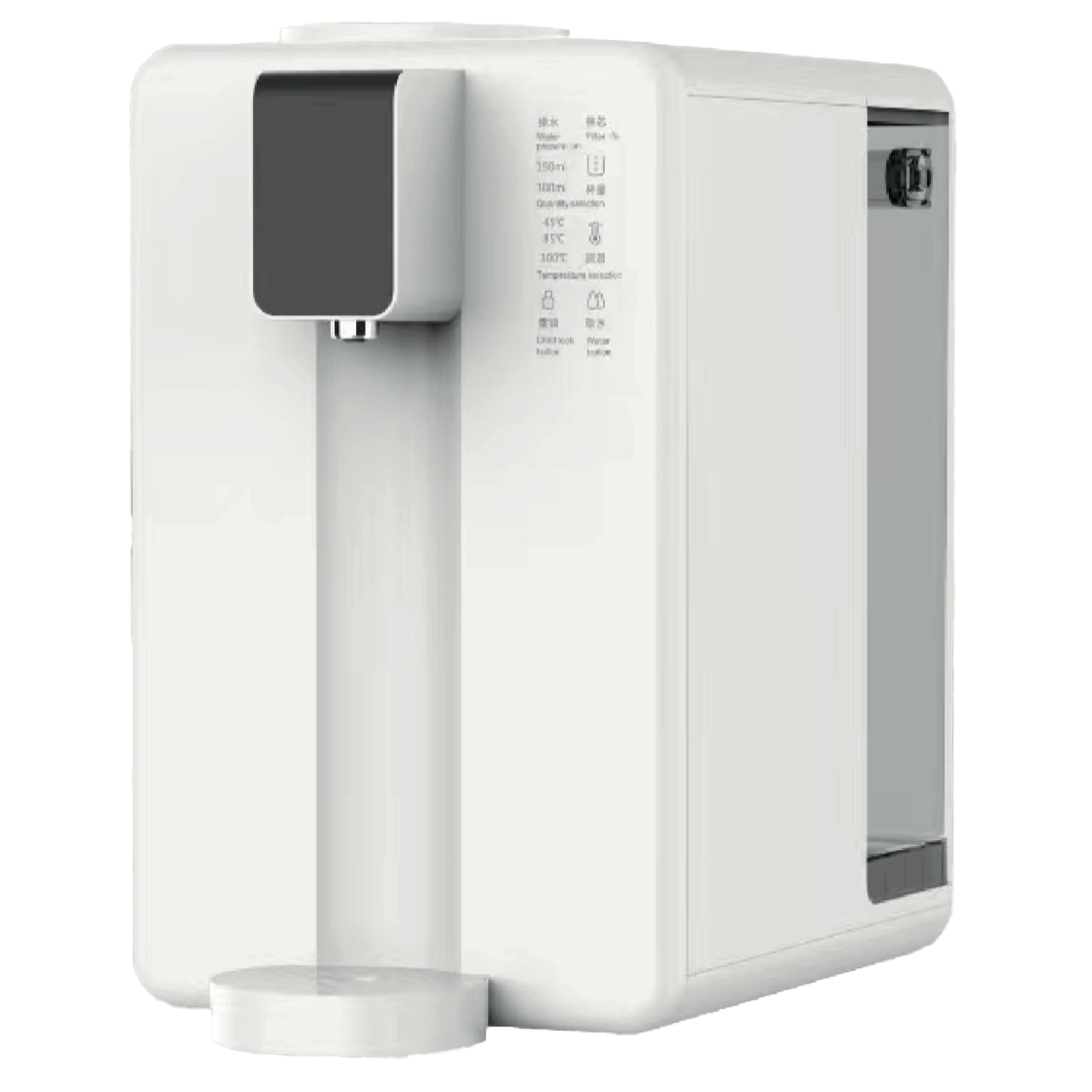
Great water deserves precise temperature control. The MySea T1 countertop RO purifier pairs clean water with instant hot output — no separate kettle required.
GREEN TEA
45°C
Gentle steep for tender buds — preserves sweetness, limits harsh catechins
OOLONG
85°C
Balanced heat for rolled or strip oolong — florals and body without scorching
PU’ER / BLACK
100°C
Full boil for aged tea, heicha, and most black teas — maximum extraction, clean base
Combined with RO + UV purification, you get a single benchtop system that handles both the chemistry and the thermodynamics of a serious daily ritual — whether your morning is a pour-over, a gaiwan session, or both.
Upgrade the 98% first — the remaining 2% will finally taste expensive. Use SCA-informed targets as a compass, strip tap surprises away with RO, then match temperature to tea style (or your coffee recipe). Your beans and leaves were rarely the bottleneck; the solvent was.
Interested in the MySea T1?
Five-star hotel water quality, right on your countertop. RCM Certified.
Share this article
Related Articles
The Complete Guide to Safe Water for Baby Formula in Australia
What water should you use for baby formula? Learn why paediatricians recommend purified water, the hidden risks in tap and bottled water, and how to prepare formula safely.
TravelWhy Hotel Water Isn't As Safe As You Think (And What to Do About It)
Old pipes, roof-top tanks, and Legionella — hotel water safety is a real concern for travellers in Australia and abroad. Here's what you need to know.