Home Guide — Australia
Your new address comes with a new water story
Council reports describe water leaving the treatment plant. What matters for your family is what arrives at your tap — after kilometres of pipes, fittings, tanks, and sometimes a private bore.
Moving is exhausting enough without second-guessing every glass of water. Yet a quick, structured check in your first week can save months of mystery taste, stained laundry, or worry about baby formula and pets. This guide walks you through what to look for, when to test, and how renters can get bottled-quality water without touching the plumbing.
First checks: pipes, senses, and a TDS meter
Start before you fall in love with the kitchen. Pipe age and materials matter as much as suburb reputation: pre-1989 work may include lead solder on copper joints, older galvanised pipe can shed rust, and some rural properties still have legacy fittings worth replacing over time.
Run the cold tap after the house has been empty for a few hours (or first thing in the morning) and watch colour and clarity. A burst of brown often means disturbed sediment or corroding iron; persistent cloudiness can point to aeration or fine particles. Taste and smell are practical signals: strong chlorine or “swimming pool” notes are common in Australian distribution systems; metallic or earthy tones can mean copper, manganese, or tank biofilm.
A handheld TDS (total dissolved solids) meter is inexpensive and useful for tracking change, not for diagnosing safety alone. Typical Australian municipal water often reads roughly 150–450 ppm depending on source blends and hardness; a sudden jump after moving, or readings far outside what neighbours report, is a prompt to flush lines longer or ask your water provider about local averages. RO-treated water is usually under 50 ppm at the outlet — useful as a sanity check once you install point-of-use filtration.
📊 NEW-PLACE WATER — AT A GLANCE
1989
Lead-based solder on drinking water installations was phased out nationally — homes plumbed earlier deserve extra scrutiny.
2–5 min
Flush cold taps after vacation or renovation dust — many taste and particle issues improve before you spend a dollar on filters.
150–450
Typical municipal TDS range (ppm) — your postcode and water source blend; compare to your meter, not to random internet lists.
<50 ppm
What you often see after a healthy countertop RO — a useful benchmark if purity is your goal.
Renters vs owners: who can change what?
Renters usually cannot alter service lines or install under-sink systems without permission. You can still document issues, request strata or landlord disclosure for apartments (tank inspections, backflow devices), and use portable, removable purification that does not modify the property.
Homeowners can plan phased upgrades: flushing protocols, filter jugs, then undersink or whole-house systems where budget and water chemistry align. Either way, the same first-week observations apply — only the long-term toolkit differs.
Renting
Focus on portable RO or certified benchtop units, keep receipts, photograph meter readings, and escalate persistent colour, smell, or illness patterns through your agent in writing.
Owning
You can schedule a plumber to inspect materials, replace suspect sections, and pair point-of-entry screens with point-of-use RO for drinking and cooking.
Common Australian home water quirks
Older copper with historic lead solder can elevate lead at the tap after stagnation, especially in first-draw samples. Mitigation includes flushing before drinking and, where budget allows, replacing problem sections.
Apartments with roof tanks or booster sets add another leg between the street and you. Tank hygiene, inspection frequency, and mixing with mains supply vary by building — ask the body corporate for the latest tank service record.
Rural bore water may taste fine while carrying hardness, iron, manganese, or agricultural runoff. Bores sit outside municipal testing programmes, so lab testing is even more important there.
Your first week: a visual checklist
Work through these in order; most steps cost little more than attention and a notebook.
Step-by-step — first seven days
Day 1 — Map every tap. Label kitchen cold, bathroom cold, laundry, outdoor. Note which feeds the fridge if plumbed.
Day 1 — Flush and observe. Run cold kitchen 3–5 minutes; check colour, smell, and taste. Repeat after work hours.
Day 2 — TDS baseline. Measure the same tap morning and evening; log numbers alongside shower clarity and kettle scale.
Day 3 — Read local data. Download your water corporation's consumer confidence or quality report; compare parameters to what you sense at home.
Day 4 — Hot vs cold. Never use unflushed hot tap for drinking. Note if hot-only metallic taste suggests cylinder or fitting issues.
Day 5–6 — Decide on testing. If pregnant, infants, immunocompromised family, bore supply, or visible issues — book appropriate lab suites, not guesswork.
Day 7 — Point-of-use plan. If municipal water is legal yet unpleasant, a countertop RO closes the gap without strata debates.
When to test, and how
Council and water corporation data describe compliance at representative sites — valuable context, not a guarantee for your brassware. Many utilities publish annual or rolling summaries aligned with the Australian Drinking Water Guidelines; start there, then escalate if your home signals disagree.
DIY TDS is for trends. Laboratory testing is for metals, bacteria, nitrates, and complex organics — especially on bores or after plumbing work. Some councils or universities offer community testing days; otherwise use an accredited environmental lab and follow their sampling instructions (first-draw vs flushed matters for lead).
Why portable countertop RO suits renters
Undersink RO is excellent when you own the sink. Renters need the same contaminant reduction without drilling, drain tees, or landlord negotiations. A benchtop reverse osmosis unit fed from a jug or direct fill gives you membrane-grade reduction of dissolved salts, heavy metals, and many treatment chemicals, with the option to take it to your next lease.
The MySea T1: no-install peace of mind for any new home
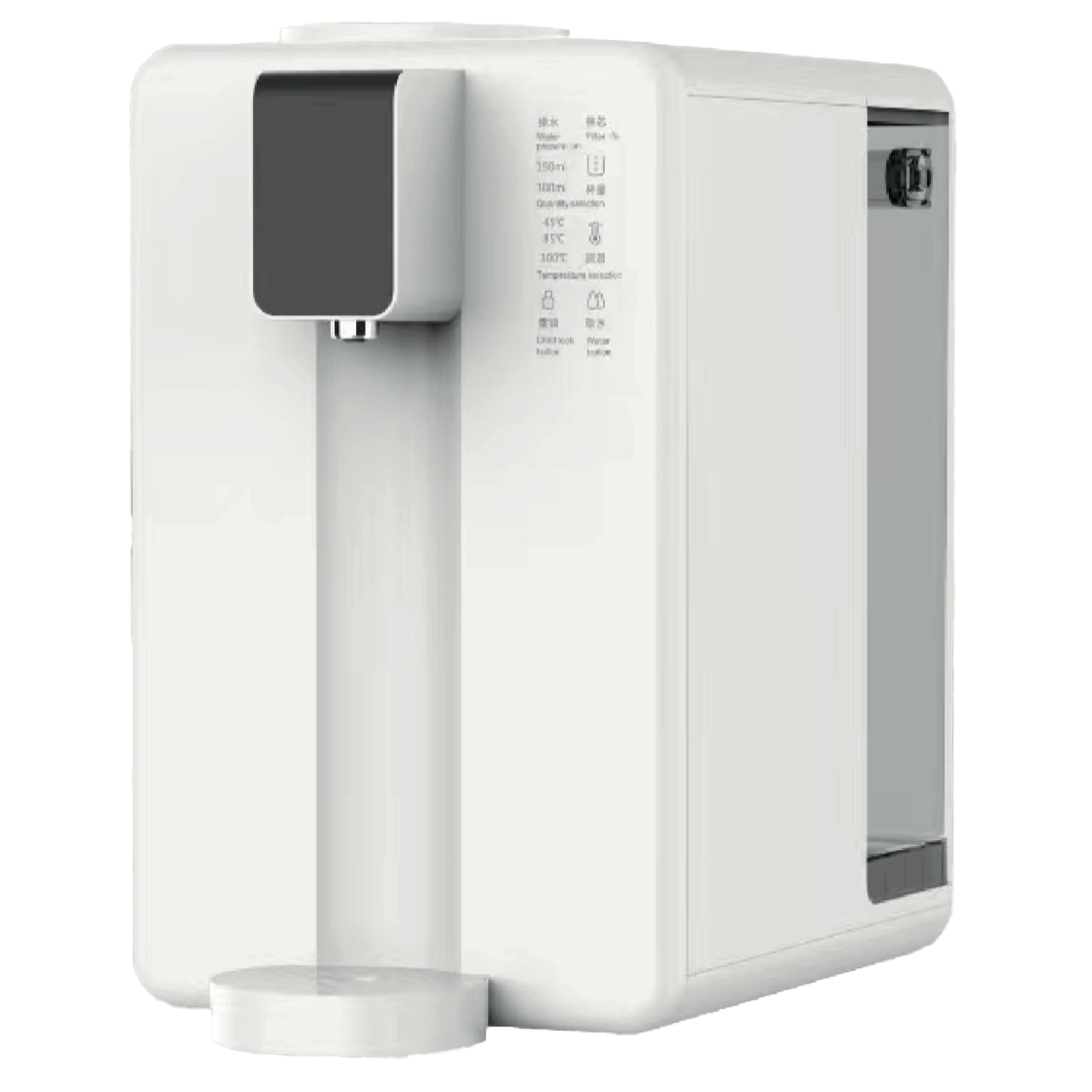
The MySea T1 is built for exactly this transition: zero plumbing modification, RO + UV in one footprint, and instant hot water for tea, oats, and sterilising baby bottles. You get a stable, low-TDS drinking stream whether you are in a heritage terrace, a high-rise with a mystery tank, or a regional property on blended supply.
Move-in takeaway
Check early, test when signals demand it, filter at the point you drink
You cannot see every risk in a walk-through, but you can control the last half metre to your glass. The T1 keeps that control portable — perfect for the first home, the fifth rental, or anything in between.
Interested in the MySea T1?
Five-star hotel water quality, right on your countertop. RCM Certified.
Share this article
Related Articles
The Complete Guide to Safe Water for Baby Formula in Australia
What water should you use for baby formula? Learn why paediatricians recommend purified water, the hidden risks in tap and bottled water, and how to prepare formula safely.
TravelWhy Hotel Water Isn't As Safe As You Think (And What to Do About It)
Old pipes, roof-top tanks, and Legionella — hotel water safety is a real concern for travellers in Australia and abroad. Here's what you need to know.